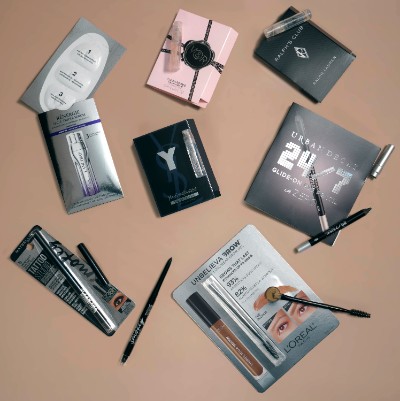
Product sampling has long been a tried and true method for growing brand awareness and customer loyalty. While COVID-19 changed just about everything we do and how we do it, it has not altered the effectiveness of the promotional product trial, especially for makeup and skincare. From sample-sizes of new products packaged with full-size favorites, to printed inserts and coupons tailored to your ideal audience, beauty product trial is a marketing tool with a bright future.
It’s wise to consider, as you formulate your product sampling campaign, that even in-store sampling is bound to change post-COVID-19. Customers clearly want assurance that their sampling experience will be safe and hygienic. Packaging will play a big role in inspiring confidence and making your brand stand out. So, too, will flyers and promotional inserts for online sales. Read on to see why trial is still such a winning strategy, and how to take advantage.
Recalibrate Your Goals for Beauty Product Sampling
Perhaps a former goal of your beauty product sampling campaigns was to simply distribute products to as many customers as you could reach. In sample marketing, this method is sometimes referred to as “spray and pray.” In big box situations, this can be a very effective approach. Even though the customer base is fairly random, individuals who respond well to a product can access it immediately. A shopper who tries a food or beverage item from a sample table, and likes it, can pick up the full-size item right then and there. Certainly, in-store sampling will continue to be relevant. However, even if your goal is to sell more products at Costco or Sam’s Club, it pays to define your goals in greater detail. Reasons to offer a trial-size product include:
· Bringing a new beauty product to market
· Building market share of an existing beauty product
· Expanding distribution
What market you choose to sample to depends on defining goals as well as the size of your marketing budget. A targeted beauty product trial is likely to be more cost effective and deliver higher ROI than a blanket approach. Overarching goals may be to drive new customers to your brand, as well as sell a new product to your existing customer base. Strategies to target your audience include addressing a special interest, or narrowing your sample audience by age demographic or region.
Digital Sampling for Beauty Products
When people hear the term, “digital sampling,” there can be some confusion as to what it is. For instance, one question may be, is there an actual product? The answer is, yes, no, and sometimes. A concrete and yet online-generated version of digital product sampling involves including a trial-size sample of a different product with a customer’s online order. For a customer, it’s a gift. For you, it’s a way to introduce (or reintroduce) a product that needs more exposure alongside a core product. The customer is likely to reciprocate with a purchase of the new product for two primary reasons. The first is, research shows that people respond with a purchase to a trial. According to Business Standard, conversion rates for product sampling campaigns are higher than other marketing strategies. The other reason is that they’ve already expressed a preference for your brand, and trust they’d like something new from your line of products.
Some online-only companies approach sampling a little differently. For example, an online cosmetics company that wants to promote a signature product may offer a mini or even half-sized version at a lower price. While not strictly a free trial, this strategy can build sufficient brand confidence and loyalty for the customer to buy the full-size product, or even sign up for a subscription box service.
Time Your Beauty Product Trials Appropriately
To think seasonally about a beauty sample marketing campaign, start thinking ahead, before the season is upon you and your ideal consumer. Sometimes this means placing your trial within—or appropriately before—a holiday. At other times, you may consider timing a product sample or trial to boost brand awareness and sales in a traditionally slower season for your product. Your brand can also try aligning with a partner!
Measure the Success of Your Promotional Campaigns
The smartest use of beauty product sampling as part of your brand strategy, in addition to driving sales, is data collection and analysis. Not every campaign yields the same results, but each and every campaign can provide you with ways to make the next one better.
Get in touch with CCG Marketing Solutions to learn more about integrated services including packaging, design, print, and fulfillment.